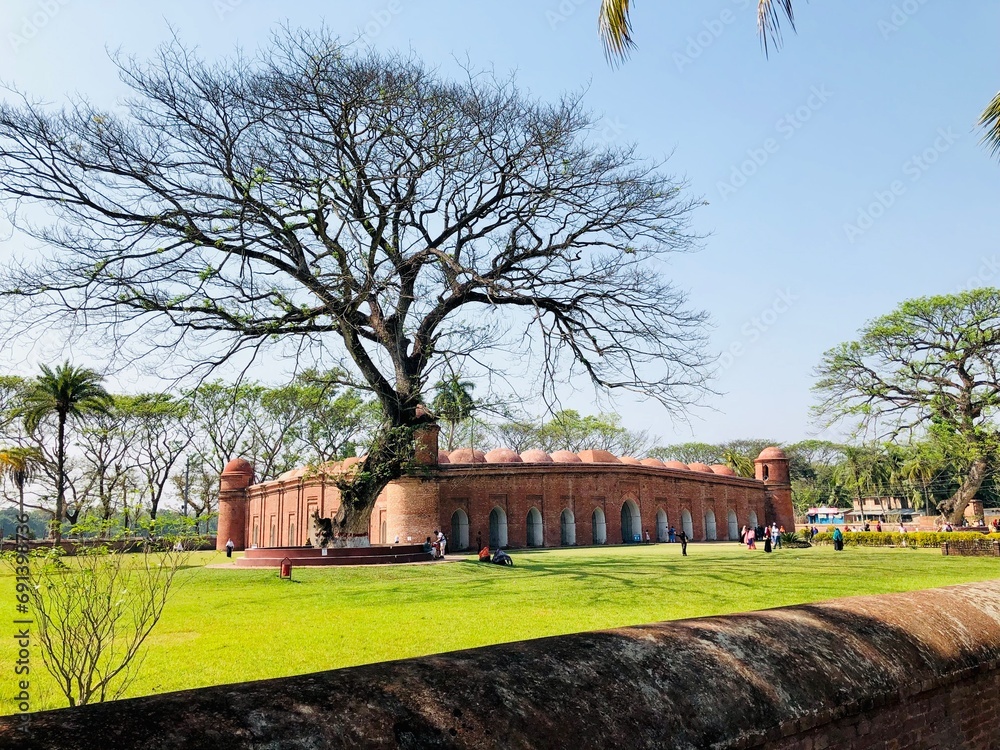
The Sixty Dome Mosque (Bengali: ষাট গম্বুজ মসজিদ, Shat Gombuj Masjid) is the largest mosque from the Sultanate period in Bangladesh and one of the most remarkable Islamic architectural monuments in South Asia. Built during the Bengal Sultanate era (1352–1576), it stands as an enduring testament to the region's rich Islamic heritage.
The mosque was built by Khan Jahan Ali, a revered Sufi saint and administrator who governed the Khalifatabad region (modern-day Bagerhat) during the 15th century. Khan Jahan transformed this mangrove-laden area into a thriving Islamic city, complete with mosques, roads, reservoirs, and public buildings.
Located near the ancient city of Bagerhat at the meeting of the Ganges and Brahmaputra rivers, the mosque occupies a strategic and spiritually significant location. The area's proximity to the Sundarbans mangrove forest adds to its mystique.
.jpg)
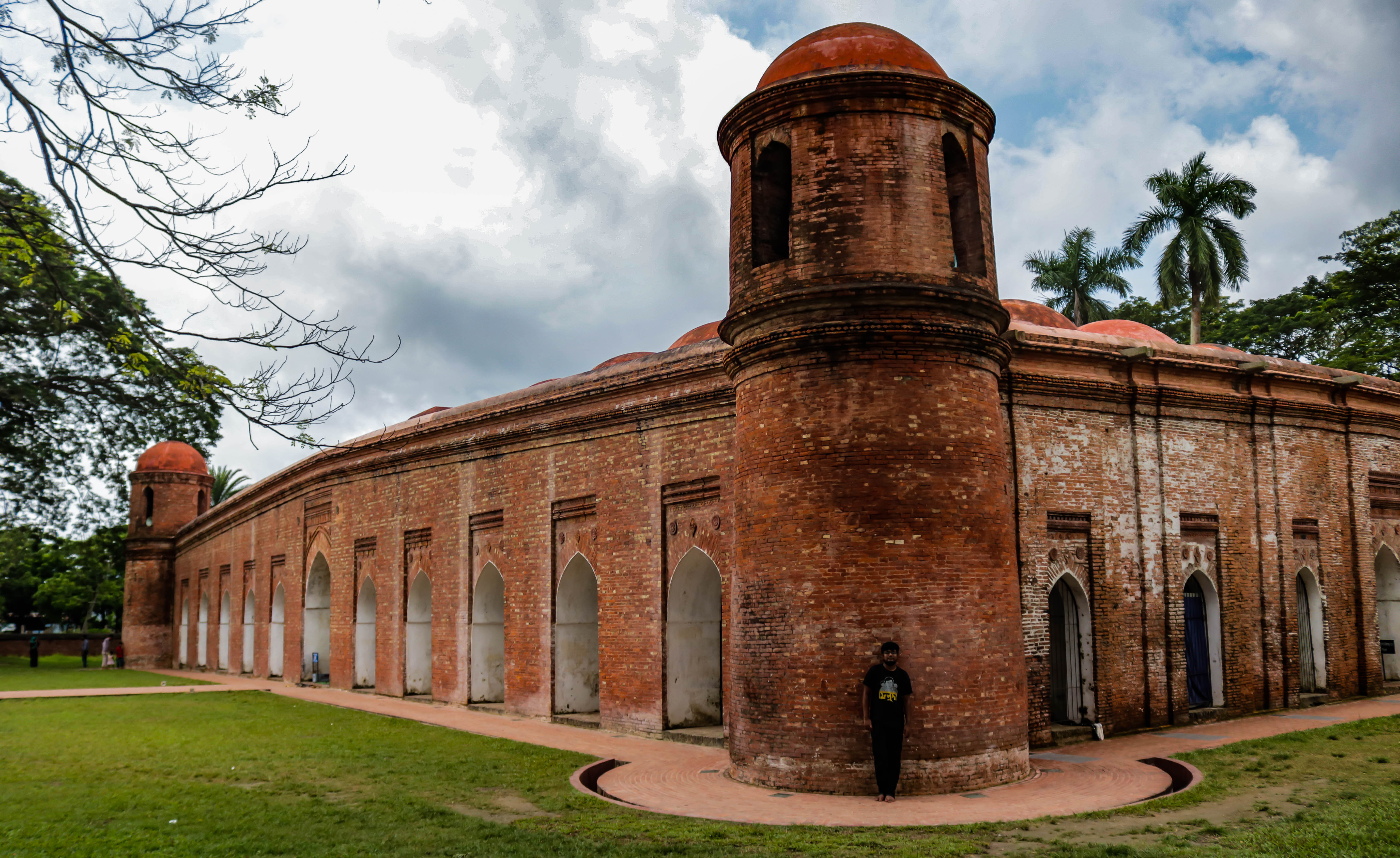
Despite its name, the mosque actually contains 81 domes — 77 covering the main prayer hall and 4 positioned atop corner towers. The name 'Shat Gombuj' likely derives from the 60 stone pillars (columns) that support the structure, though local legend attributes the name to the supposed original 60 domes.
The Bengali word 'Shat' can mean both 'sixty' and 'many,' suggesting the name may simply denote a mosque of 'many domes.'
The mosque served not only as a place of congregational prayer but also as a seat of governance and justice during Khan Jahan's administration. Its vast prayer hall could accommodate hundreds of worshippers, making it the central religious institution of the Khalifatabad region.
Today, it remains one of Bangladesh's most important cultural landmarks — a symbol of the nation's rich Islamic heritage and architectural ingenuity that attracts scholars, architects, tourists, and pilgrims from around the world.
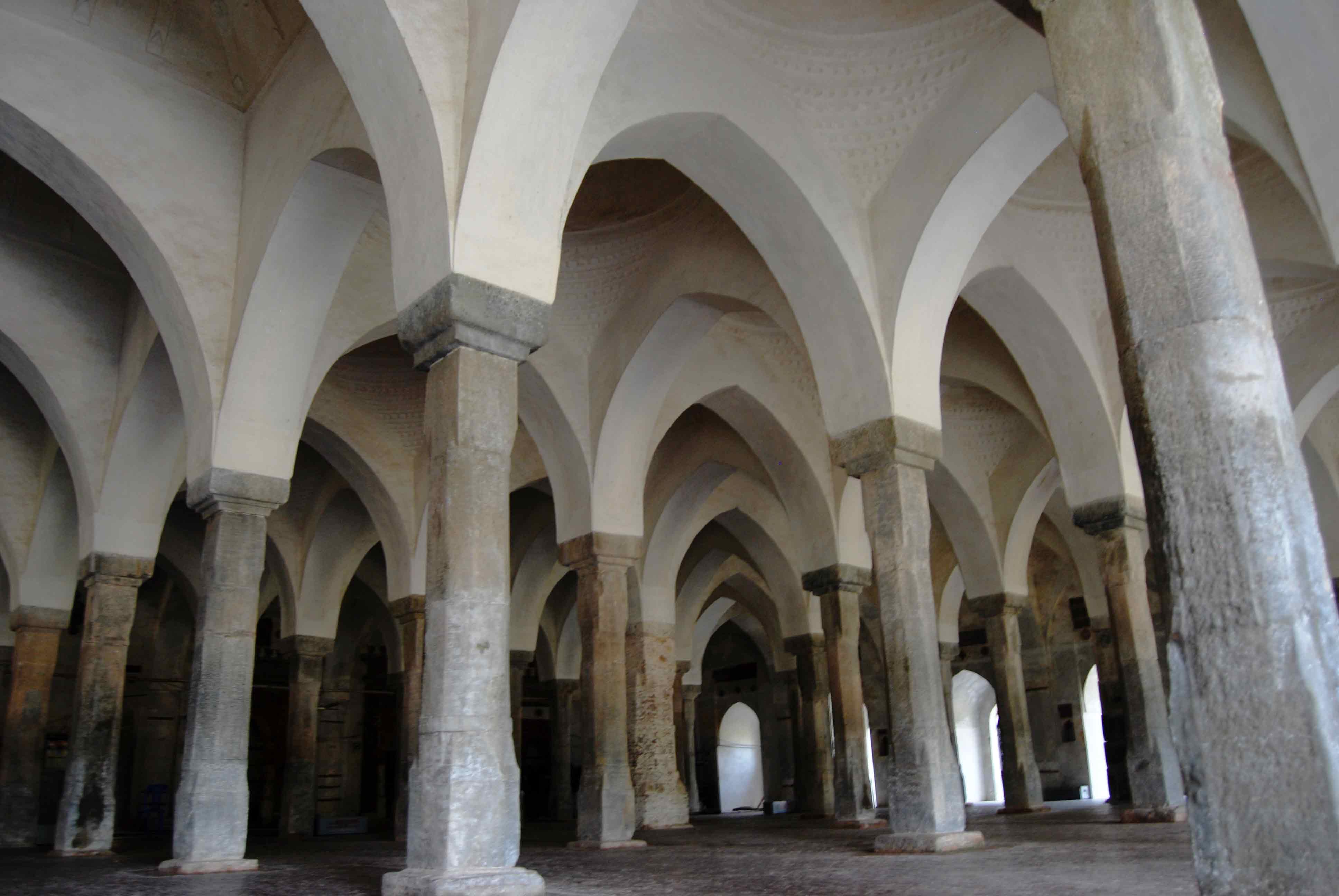
In 1985, the Sixty Dome Mosque and the surrounding Historic Mosque City of Bagerhat were jointly inscribed as a UNESCO World Heritage Site (criteria i, iv). The UNESCO citation recognizes the site as:
"An outstanding example of architectural ensemble that illustrates a significant stage in human history."
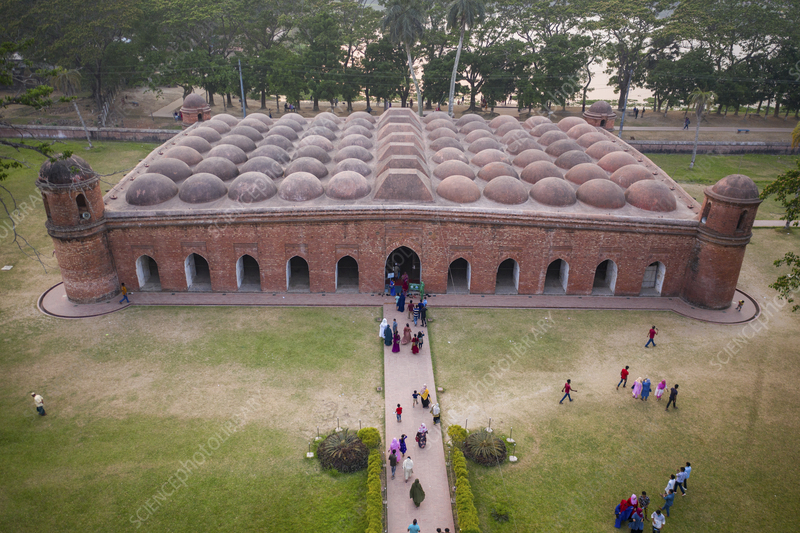
The Bengal Sultanate was an independent Muslim state that ruled over the Bengal region for over two centuries. Under its patronage, a distinctive Indo-Islamic architectural style emerged — combining local terracotta craftsmanship with Islamic geometric and structural principles.
The Sixty Dome Mosque is the finest surviving example of this unique fusion, demonstrating how Islamic culture was adapted to the local Bengal context.

Cultural and Heritage Ambassador

Regional Youth Engagement & Cultural Affairs Track-II Diplomacy Strategist | Advancing Civilisational Dialogue, Cultural Geopolitics & Indo–BIMSTEC Regional Integration
Cultural and Heritage Ambassador
Entrepreneur · Social Architect · Nation-Building Strategist
Founder, Torus Group · Architect, SAKSHAM Mission · Co-Founder, Bangladesh Cultural Heritage Trust
Digant Sharma is an Indian entrepreneur whose two-decade career spans technology, agriculture, financial inclusion, digital governance, legal reform, cultural heritage, and large-scale CSR. As Founder, Chairman, or President of more than thirty organisations under the Torus Group, he has built an integrated ecosystem that has reached over 100,000 tribal and Banjara farmers in Maharashtra, mobilised multi-crore CSR commitments across six initiative streams, and conceptualised SAKSHAM — Sampoorna Aay Kar Suvidha Mission — a sovereign-scale national programme to formalise India's informal economy by 2029.
Mr Sharma's career evidences five capabilities: (i) CSR delivery at national scale; (ii) multi-faith cultural-heritage experience; (iii) Government engagement at the State and Central level; (iv) cross-border capital mobilisation; and (v) digital and technology backbone, directly applicable to the proposed digital platform supporting the Bangladesh programme.
Regional Youth Engagement & Cultural Affairs Track-II Diplomacy Strategist | Advancing Civilisational Dialogue, Cultural Geopolitics & Indo–BIMSTEC Regional Integration
Regional Youth Engagement & Cultural Affairs (BIMSTEC) · Track-II Diplomacy Strategist
Specialization: Civilisational Dialogue • Cultural Geopolitics • Indo–BIMSTEC Regional Integration
For the past 18 years, Rahul Laxman Patil has been working in the national interest, promoting social harmony, youth engagement, and regional cooperation across South Asia within the framework of the BIMSTEC region.
Recently, he conceptualized the Tri-Services Lord Buddha Circuit Motorcycle Expedition, spanning seven states of India, aimed at promoting peace, cultural diplomacy, and youth participation, with engagement from institutions including the Ministry of External Affairs, Nalanda University, and other national bodies.
He works as a Track-II Diplomacy Strategist contributing to informal diplomatic engagement platforms that support regional integration, people-to-people connectivity, and cultural geopolitical understanding among BIMSTEC member states.
Strengthening collaborative frameworks between youth networks, cultural institutions, and strategic dialogue platforms across BIMSTEC nations, with emphasis on shared heritage, civilisational continuity, and regional cooperation.
Lead contributor in the conceptualisation and coordination of the Tri-Nation Tri-Services Lord Buddha Circuit Motorcycle Expedition (BIMSTEC Region), a transnational initiative promoting civilisational connectivity, youth engagement, and defence-culture diplomacy across India, Nepal, Sri Lanka, and the wider Indo–BIMSTEC space.
Associated with regional cultural cooperation initiatives focused on heritage revitalisation and cross-border civilisational dialogue, including Indo–Bangladesh cultural heritage collaboration frameworks.
Advancing civilisational dialogue, cultural understanding, and strategic regional integration across the Indo–BIMSTEC space through Track-II diplomacy and youth engagement initiatives.